

PERRYVILLE — For a group of Perryville Primary Center students, learning about dinosaurs didn’t come from a textbook last week — it came from bones they could actually touch.
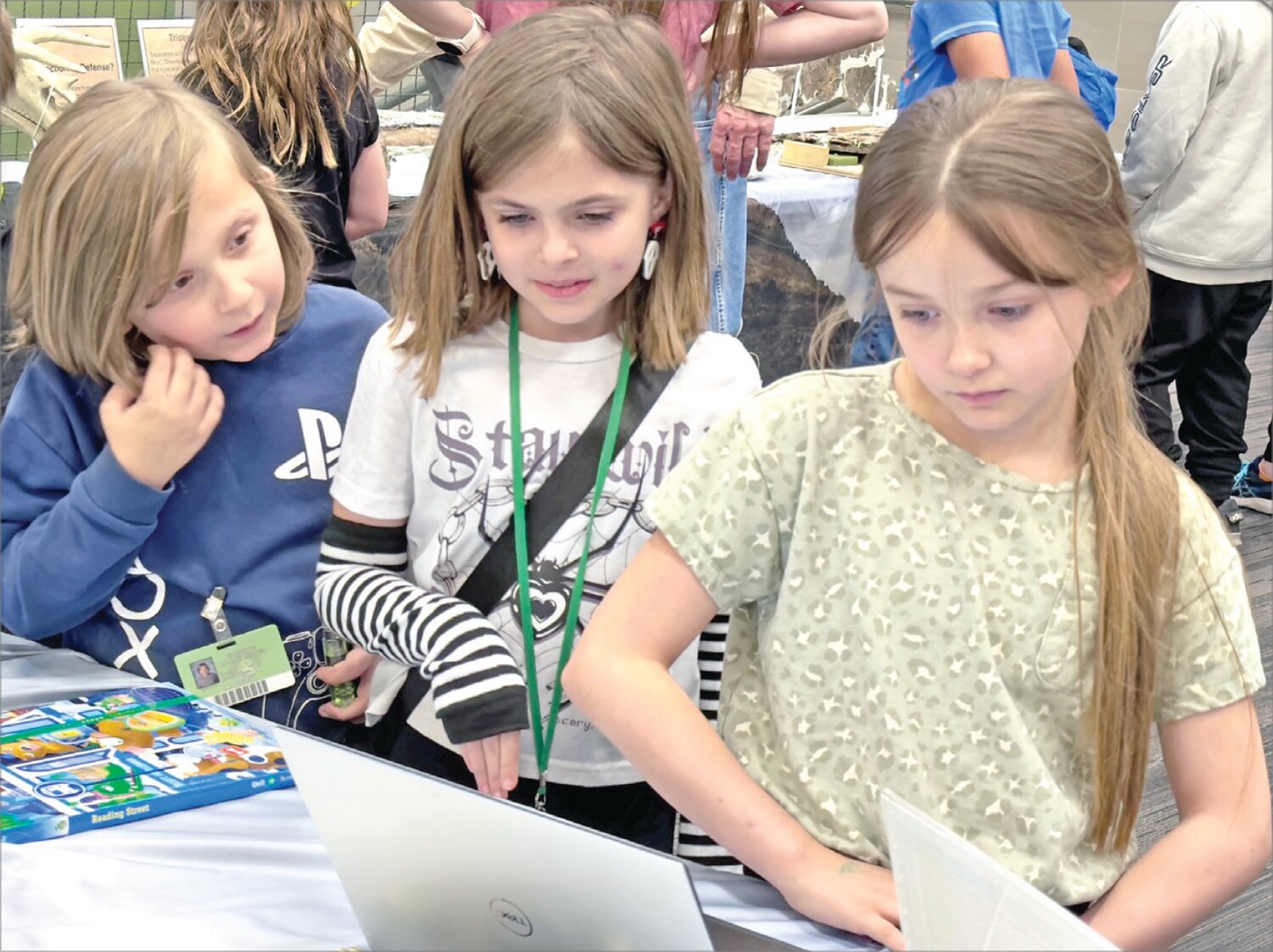
Inside the school library, wide-eyed Pre-K through second-grade students gathered around tables filled with fossils, including one of the rarest finds imaginable: a Tyrannosaurus rex bone discovered by a Perryville native.
The hands-on paleontology program, organized through a collaboration of local educators, Southeast Missouri State University and community partners, brought science to life in a way few classrooms ever can.
“This is something you don’t normally get to experience,” said Trish Erzfeld, Perry County tourism director, who gave a presentation at the event. “Kids hear about dinosaurs all the time, but to actually touch real fossils — that’s special.”
The March 18 event featured representatives from SEMO’s geoscience department and members of Paleo Adventure 360, a nonprofit group that leads fossil digs in Montana. Over the course of the day, more than 575 students rotated through half-hour presentations.
At the center of the excitement were several fossils tied directly to Perryville — a T. rex bone uncovered last summer in Montana by SEMO student Megan Bucheit, the daughter of Primary Center teacher Laura Bucheit, who organized the event.
“T-Rex bones are very rare to find,” noted Bill Ford, communications director for Perry County School District 32. “To be able to show that to our students — and have that connection to someone from their own community — makes it even more meaningful.”
The program wasn’t just about fossils, though. It was about sparking curiosity.
During one session, presenter Alan Westfall asked students to shout out their favorite dinosaur. The room erupted with enthusiastic cries of “T-Rex!” and “Triceratops!” — a moment that perfectly captured the energy of the day.
From there, the lesson turned educational, explaining the difference between carnivores and herbivores, how fossils are formed and why certain dinosaur bones are found more often than others.
“We try to make it fun, but also teach them real science,” Westfall said. “They’re learning without even realizing it.”
Students also learned about the painstaking work of paleontology — from searching for fossils in the field to carefully digging them out and preserving them.
“It’s like finding a needle in a haystack,” one presenter explained. “You can walk all day and not find anything — but when you do, it’s incredible.”
That sense of discovery is something Erzfeld knows firsthand. She participated in a Montana dig herself and even found a hadrosaur bone, which she named “Trish.”
“The kids have been fantastic,” she said during the event. “They’re curious, they ask questions, and they’re really intrigued by being able to touch something that’s millions of years old.”
For Laura Bucheit, the program was about more than dinosaurs — it was about opening doors.
As a school counselor, she sees career awareness as a key part of early education, and paleontology offers a unique way to introduce students to science-based careers.
“When they’re this young, it’s my job to help them discover what they might be interested in,” she said. “This ties into science, geology, even careers like environmental studies and technology.”
The event was made possible through a $1,000 grant Bucheit secured, which will also fund classroom kits featuring rocks, minerals and fossils for future lessons.
The connection to SEMO added another layer of inspiration, showing students a potential path from Perryville classrooms to real-world scientific discovery.
“You don’t have to be a scientist to start learning about this,” one SEMO representative told students. “You just have to be curious.”
That message seemed to resonate.
Throughout the day, students leaned forward, raised their hands and eagerly lined up for a chance to get a closer look at the fossils — some of which were still partially encased in plaster from their excavation.
For many, it was likely the first time science felt tangible.
And for at least a few, it may have been the moment a lifelong interest began.
As one presenter put it with a smile, “Some of these kids might be the ones out there finding the next dinosaur.”
If the excitement inside the Primary Center library was any indication, that future may already be taking shape — one fossil at a time.


